

Note: Photography is for directional purposes only. Should not be used eternally.
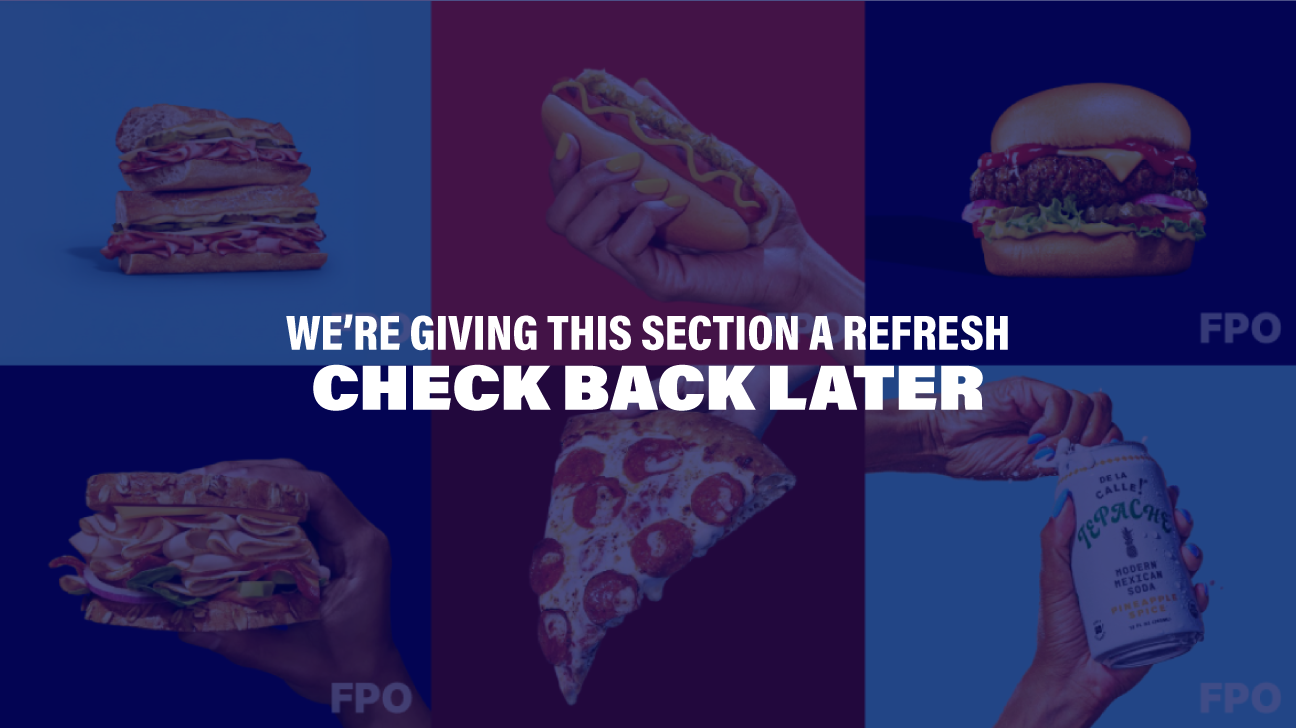
Studio Product Photography
Look & Feel—Our food photography should be craveable first and retain a bold, graphic, and iconic look and feel. Never show food on white.
Framing & Composition—Framing should be tight crops, filling 60-80% of the screen. Composition should be a food item sitting on a surface or a hand holding a food item. Nails can be bold colors for an added moment of joy.
Lighting—Lighting should be hard, directional, and high-energy, bringing that “midday sun” feel. Allow defined shadows and bright highlights.
Colors & Backgrounds—Use solid, flat backgrounds. No gradients or textures. Avoid backgrounds that closely match the main food color.
Macro Product Photography
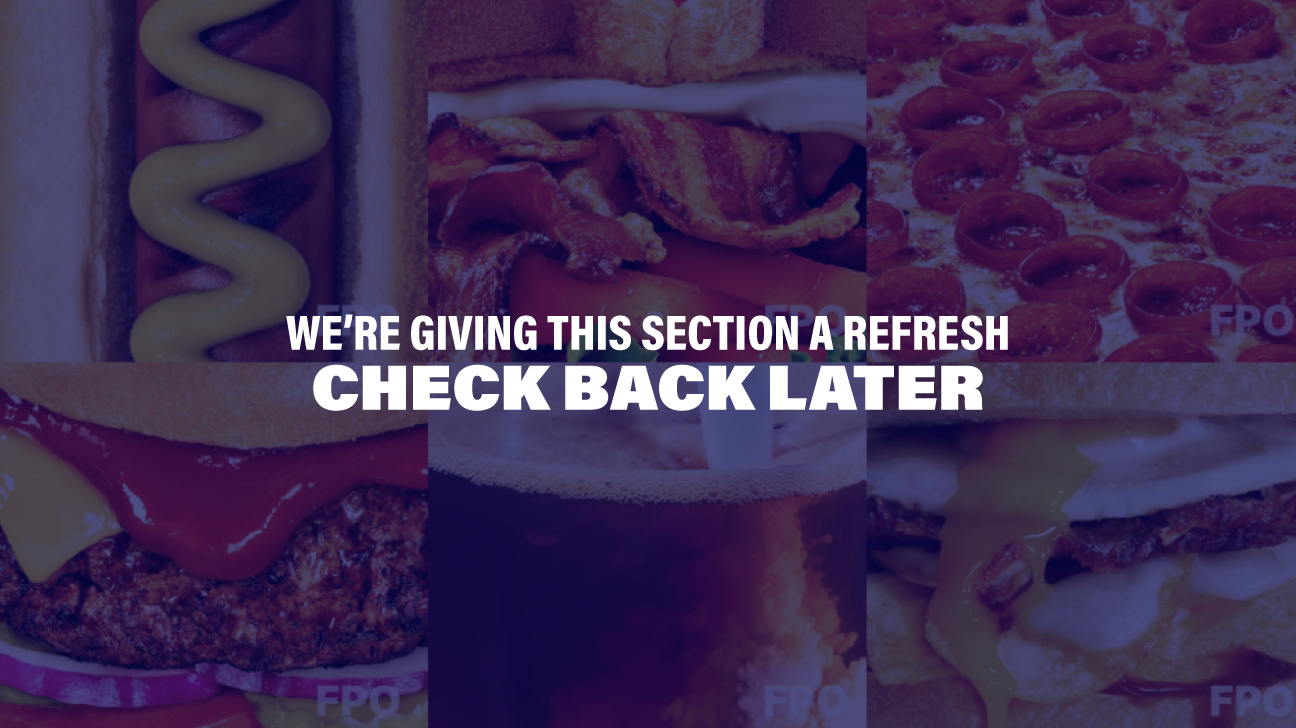
Look & Feel—Food photography should feel bold, craveable, and high-energy—like the food is as exciting as the stop itself. The style uses tight macro crops, saturated color, and graphic composition.
Framing & Composition—Food is shot extremely close so textures and ingredients dominate the frame. Focus on ingredients, drips, and textures.
Color & lighting—Food should be hyper-appetizing and saturated. If using background colors, they should be simple and bold. Lighting should emphasize texture and shine.
Lifestyle Photography
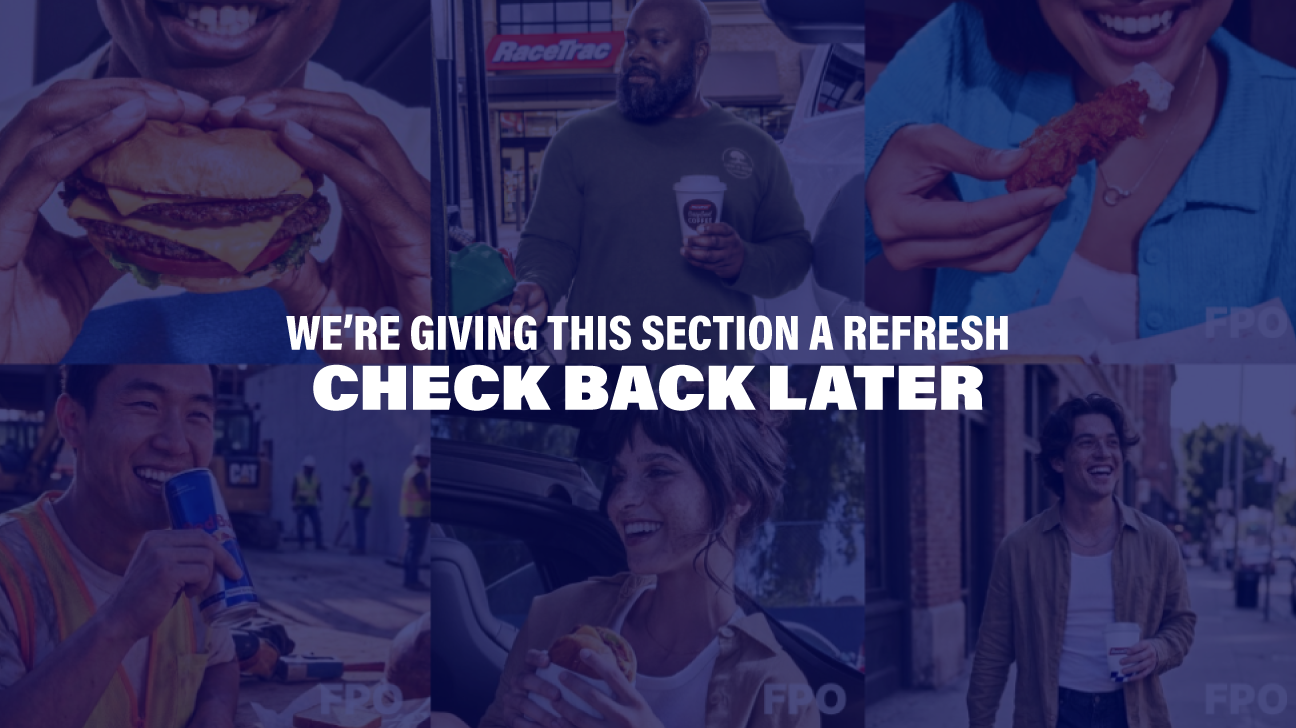
Look & Feel—Lifestyle imagery should feel spontaneous, social, and energetic—like a real moment during someone’s day.
Content—
- Food should be the hero of the moment, even when people are present.
- Frame food close to the camera for appetite appeal
- Include RaceTrac packaging where possible
- Capture the moment of the first bite or sip
- Show texture, sauces, cheese pulls, crunch
People—Cast people who feel real and relatable, not overly polished.
- Prioritize talent with genuine, big reactions
- Present a wide mix of ethnicities, ages, and backgrounds
We know what works, and we’ll help you nail the details until your promos hit exactly the way you want them to.
Whether you’re launching a campaign, welcoming new hires, or building culture from the inside out, we’ll help you design custom takeaways that really stand out.
You bring the ideas, the passion, the people. We’ll bring the canvas to get it noticed.


Note: Photography is for directional purposes only. Should not be used eternally.
Studio Product Photography
Look & Feel—Our food photography should be craveable first and retain a bold, graphic, and iconic look and feel. Never show food on white.
Framing & Composition—Framing should be tight crops, filling 60-80% of the screen. Composition should be a food item sitting on a surface or a hand holding a food item. Nails can be bold colors for an added moment of joy.
Lighting—Lighting should be hard, directional, and high-energy, bringing that “midday sun” feel. Allow defined shadows and bright highlights.
Colors & Backgrounds—Use solid, flat backgrounds. No gradients or textures. Avoid backgrounds that closely match the main food color.
Macro Product Photography
Look & Feel—Food photography should feel bold, craveable, and high-energy—like the food is as exciting as the stop itself. The style uses tight macro crops, saturated color, and graphic composition.
Framing & Composition—Food is shot extremely close so textures and ingredients dominate the frame. Focus on ingredients, drips, and textures.
Color & lighting—Food should be hyper-appetizing and saturated. If using background colors, they should be simple and bold. Lighting should emphasize texture and shine.
Lifestyle Photography
Look & Feel—Lifestyle imagery should feel spontaneous, social, and energetic—like a real moment during someone’s day.
Content—
- Food should be the hero of the moment, even when people are present.
- Frame food close to the camera for appetite appeal
- Include RaceTrac packaging where possible
- Capture the moment of the first bite or sip
- Show texture, sauces, cheese pulls, crunch
People—Cast people who feel real and relatable, not overly polished.
- Prioritize talent with genuine, big reactions
- Present a wide mix of ethnicities, ages, and backgrounds
Lighting
- Ensure food colors feel rich, saturated, and appetizing
- Lighting should feel sunny, bright, and optimistic
Angles & Composition
- Use tight crops and macro-leaning shots for food
- Shoot at eye level or slightly below for handheld food moments
- Angles should feel like you’re there, not observing from afar
Propping & Styling
- Keep props limited to essentials (branded cups, etc)
- Props should never compete with the food
- People should feel styled naturally, not overly dramatic
Brand Overview
Brand Voice
Logo
Colors
Typography
Imagery
Graphic Elements
Layout + Application
Partnerships
Downloads + FAQs
Note: These photographs are intended for internal use only. New photography will be made available to the broader organization soon.
Studio Product Photography
Look & Feel—Our food photography should be craveable first and retain a bold, graphic, and iconic look and feel. Never show food on white.
Framing & Composition—Framing should be tight crops, filling 60-80% of the screen. Composition should be a food item sitting on a surface or a hand holding a food item. Nails can be bold colors for an added moment of joy.
Lighting—Lighting should be hard, directional, and high-energy, bringing that “midday sun” feel. Allow defined shadows and bright highlights.
Colors & Backgrounds—Use solid, flat backgrounds. No gradients or textures. Avoid backgrounds that closely match the main food color.
Macro Product Photography
Look & Feel—Food photography should feel bold, craveable, and high-energy—like the food is as exciting as the stop itself. The style uses tight macro crops, saturated color, and graphic composition.
Framing & Composition—Food is shot extremely close so textures and ingredients dominate the frame. Focus on ingredients, drips, and textures.
Color & lighting—Food should be hyper-appetizing and saturated. If using background colors, they should be simple and bold. Lighting should emphasize texture and shine.
Lifestyle Photography
Look & Feel
- Lifestyle imagery should feel spontaneous, social, and energetic—like a real moment during someone’s day.
Content
- Food should be the hero of the moment, even when people are present.
- Frame food close to the camera for appetite appeal
- Include RaceTrac packaging where possible
- Capture the moment of the first bite or sip
- Show texture, sauces, cheese pulls, crunch
People
- Cast people who feel real and relatable, not overly polished.
- Prioritize talent with genuine, big reactions
- Present a wide mix of ethnicities, ages, and backgrounds
Lighting
- Ensure food colors feel rich, saturated, and appetizing
- Lighting should feel sunny, bright, and optimistic
Angles & Composition
- Use tight crops and macro-leaning shots for food
- Shoot at eye level or slightly below for handheld food moments
- Angles should feel like you’re there, not observing from afar
Propping & Styling
- Keep props limited to essentials (branded cups, etc)
- Props should never compete with the food
- People should feel styled naturally, not overly dramatic